Your Savannah kitten is coming home — how exciting! Every kitten I raise leaves me litter trained, socialised, vaccinated and microchipped, so most of your preparation is about helping a very young cat feel safe in a brand-new place. Here is what I tell every family before collection day.
Start with a safe room
Choose a quiet room where your kitten can settle and get used to the sounds and smells of your home. It can be any size, but it must have a secure door and a proper ceiling to keep your kitten safe. Then set it up:
- Cat-proof it. Make sure the room is free of hazards, including small items that could be swallowed and anything dangerous your kitten might interact with.
- Give them places to hide. Cats often feel nervous in new surroundings. Cardboard boxes or sheets draped over chairs are great options. If your kitten is shy, take out large furniture like beds or dressers: it is much easier to interact with a kitten hiding in a box than with one hidden under something heavy.
- Add your scent. Place a t-shirt or a piece of clothing that carries your scent in the room, so your kitten gets used to you.
- Food, water and litter. Put food and water on one side of the room and an open (not covered) litter box on the opposite side, to keep things clean.
- A new scratching post. Scratching is natural and comforting. Use a brand-new post, at least one metre tall, so it does not carry the smell of other cats.
- Toys. A few toys keep your kitten busy when you are not in the room.
The first few days
- Don’t worry if appetite dips. Some kittens, especially shy ones, eat very little in the first 24 to 48 hours and may have a mild stress-related upset tummy. If your kitten refuses food for more than 48 hours, try tempting them with a little canned tuna or salmon, and speak to your vet if it continues.
- Visit often, but keep visits short. Play, gentle petting, or simply be there, reading or chatting on the phone.
- Stay patient if they are nervous. Growling, hissing or a twitching tail are all normal nervous behaviours. A calm voice and a little space are the best response.
- Open up the house slowly. Once your kitten trusts you, let them explore beyond the safe room while you are home to supervise, keeping most doors closed so they can discover the house in manageable stages. Confident kittens may be ready in two to four days; shy ones can take a few weeks.
Settling in with a Savannah
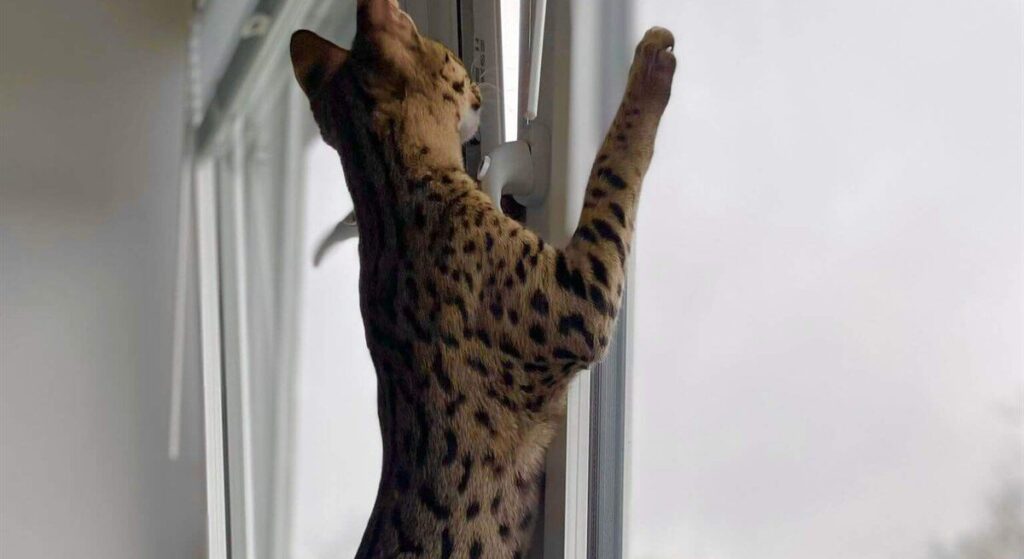
Savannahs are playful, inquisitive and high-energy, and they love being in the middle of everyday life. A few things I remind new owners:
- Make time to play. Savannahs are clever and entertaining, and many learn to play fetch and hide-and-seek. Time with you is the best enrichment.
- Let them take their time. Your kitten will explore by sniffing everything and may try out a few sleeping spots before choosing a favourite.
- Don’t be surprised by water. Many Savannahs are fascinated by it, happily splashing around or joining you in the bath.
- Keep outside doors closed. A new kitten does not know their way around yet and could easily get lost, so make sure the door to the outside shuts behind you every time.
Children, dogs and other cats
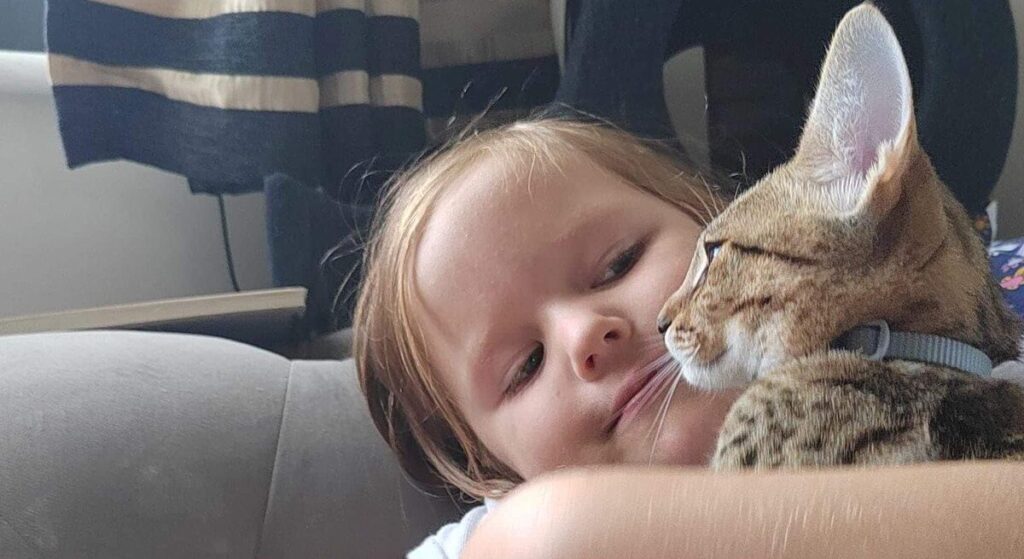
Introductions go best when they happen slowly and at your kitten’s pace. In my guide Bringing home a new cat or kitten I explain, step by step, how to introduce a new cat to other cats and to dogs, and I have written a short “message from your new cat” for children to read.
What comes home with your kitten
Every Kwazulu kitten leaves with a TICA registration and pedigree certificate, advice and information guides, and a goodie bag with food samples, information guides, a fleece blanket and toys. Kittens are also insured for five weeks with Agria. And you can always message me: lifetime friendship and support is part of the deal.
Ready to welcome a Savannah?
See who is looking for a home on my available kittens page, learn more about my cattery in London and Cambridge, or get in touch and I will reply personally. — Irina